n. [ See Sheave, n. ] 1. A slice; as, a shive of bread. [ Obs. or Prov. Eng. ] Shak. [ 1913 Webster ]
2. A thin piece or fragment; specifically, one of the scales or pieces of the woody part of flax removed by the operation of breaking. [ 1913 Webster ]
3. A thin, flat cork used for stopping a wide-mouthed bottle; also, a thin wooden bung for casks. [ 1913 Webster ]
v. i. [ OE. chiveren, cheveren; of uncertain origin. This word seems to have been confused with shiver to shatter. ] To tremble; to vibrate; to quiver; to shake, as from cold or fear. [ 1913 Webster ]
Prometheus is laid On icy Caucasus to shiver. Swift. [ 1913 Webster ]
The man that shivered on the brink of sin, Thus steeled and hardened, ventures boldly in. Creech. [ 1913 Webster ]
v. t. [ imp. & p. p. Shivered p. pr. & vb. n. Shivering. ] [ OE. schiveren, scheveren; cf. OD. scheveren. See Shiver a fragment. ] To break into many small pieces, or splinters; to shatter; to dash to pieces by a blow; as, to shiver a glass goblet. [ 1913 Webster ]
All the ground With shivered armor strown. Milton. [ 1913 Webster ]
n. [ OE. schivere, fr. shive; cf. G. schifer a splinter, slate, OHG. scivere a splinter, Dan. & Sw. skifer a slate. See Shive, and cf. Skever. ] 1. One of the small pieces, or splinters, into which a brittle thing is broken by sudden violence; -- generally used in the plural. “All to shivers dashed.” Milton. [ 1913 Webster ]
2. A thin slice; a shive. [ Obs. or Prov. Eng. ] “A shiver of their own loaf.” Fuller. [ 1913 Webster ]
Of your soft bread, not but a shiver. Chaucer. [ 1913 Webster ]
3. (Geol.) A variety of blue slate. [ 1913 Webster ]
4. (Naut.) A sheave or small wheel in a pulley. [ 1913 Webster ]
5. A small wedge, as for fastening the bolt of a window shutter. [ 1913 Webster ]
6. A spindle. [ Obs. or Prov. Eng. ] [ 1913 Webster ]
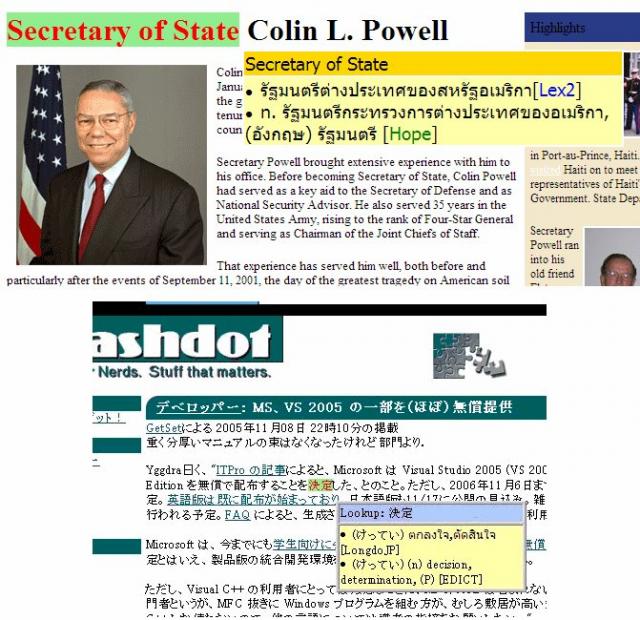
แสดงได้ทั้งความหมายของคำเดี่ยว และคำผสม ได้อย่างถูกต้อง
เช่น Secretary of State=รัฐมนตรีต่างประเทศของสหรัฐฯ (ในภาพตัวอย่าง),
High school=โรงเรียนมัธยมปลาย