(じん) (suf) (1) -ian (e.g. Italian, etc.) (attaches to name of country to denote nationality); -er (e.g. performer, etc.) (attaches to name of occupation); (2) (usu. in compound words) man; person; people; (P) [EDICT]
(と) (suf) person [EDICT]
(にん(P);たり;り) (ctr) (1) counter for people; (n) (2) (にん only) (usu. in compound words) person; (P) [EDICT]
(ひと) (n) (1) man; person; (2) human being; mankind; people; (3) character; personality; (4) man of talent; true man; (5) other people; (6) adult; (P) [EDICT]
(rén, ㄖㄣˊ) man; person; people [CE-DICT]
笑う
(わらう) (v5u,vi) (1) to laugh; (2) to smile; (3) (esp. 嗤う) to sneer; to ridicule; (P) [EDICT]
れる
() (aux-v,v, ) (1) (れる for 五段 verbs, られる for 一段. Follows the imperfective form of (v5) and (vs) verbs) (See 未然形,迷惑の受身・めいわくのうけみ) indicates passive voice (inc. the "suffering passive"); (2) (no imperative form. Infrequently used in modern Japanese, e.g. 歩ける is favoured over 歩かれる) (See ら抜き言葉・らぬきことば) indicates the potential form; (3) (no imperative form) indicates spontaneous occurrence; (4) (hon) (no imperative form) used as an honorific for others' actions [EDICT]
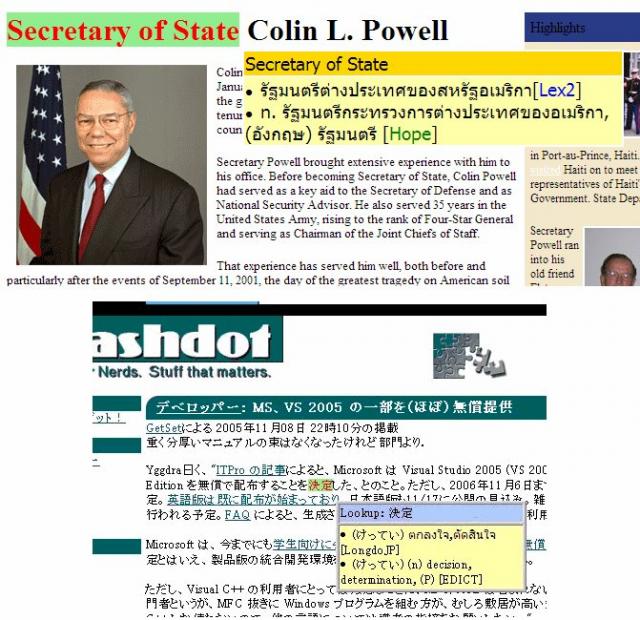
แสดงได้ทั้งความหมายของคำเดี่ยว และคำผสม ได้อย่างถูกต้อง
เช่น Secretary of State=รัฐมนตรีต่างประเทศของสหรัฐฯ (ในภาพตัวอย่าง),
High school=โรงเรียนมัธยมปลาย