(し) (n) (1) messenger; (2) (abbr) (See 検非違使) police and judicial chief (Heian and Kamakura periods); (3) {Buddh} (See 煩悩・2) klesha (polluting thoughts such as greed, hatred and delusion, which result in suffering) [EDICT]
(shǐ, ㄕˇ) to make; to cause; to enable; to use; to employ; messenger [CE-DICT]
(ず) (n) (arch) (See 五刑) imprisonment (for one to three years) [EDICT]
(と) (n) party; set; gang [EDICT]
(かち) (n) (1) foot soldier (Edo period); samurai on foot; (2) (徒, 徒歩, 歩, 歩行 only) (arch) (See 徒歩) going on foot; walking [EDICT]
(tú, ㄊㄨˊ) apprentice; disciple [CE-DICT]
承
(しょう) (n) (abbr) (See 承句) second line of a four-line Chinese poem [EDICT]
(chéng, ㄔㄥˊ) to bear; to carry; to hold; to continue; to undertake; to take charge; owing to; due to; to receive [CE-DICT]
伝
(でん) (n) (1) legend; tradition; (2) biography; life; (3) method; way; (4) horseback transportation and communication relay system used in ancient Japan [EDICT]
(つて) (n) intermediary; influence; good offices; connections; someone to trust; go-between; pull [EDICT]
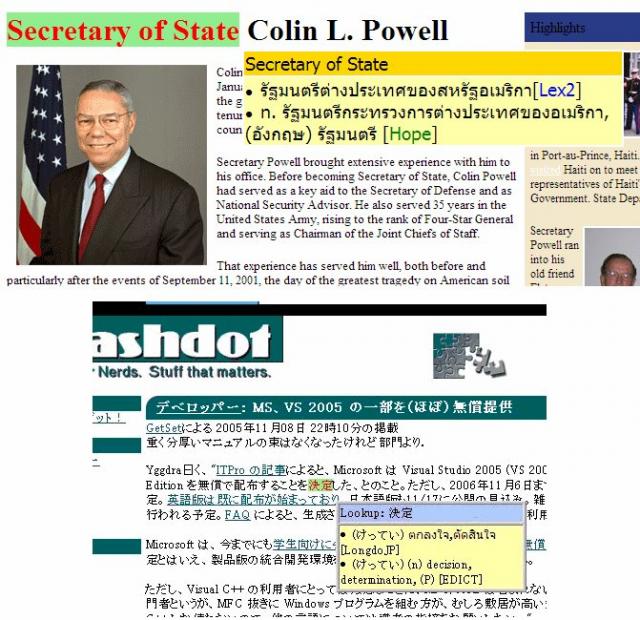
แสดงได้ทั้งความหมายของคำเดี่ยว และคำผสม ได้อย่างถูกต้อง
เช่น Secretary of State=รัฐมนตรีต่างประเทศของสหรัฐฯ (ในภาพตัวอย่าง),
High school=โรงเรียนมัธยมปลาย