(おおみ(大御);おおん;おおむ) (pref) (hon) august (in ref. to the emperor or the gods); imperial; divine [EDICT]
(yù, ㄩˋ) defend; imperial; to drive [CE-DICT]
(yù, ㄩˋ) defend; resist [CE-DICT]
呼ぶ
(よぶ) (v5b,vt) (1) to call out (to); to call; to invoke; (2) to summon (a doctor, etc.); (3) to invite; (4) to designate; to name; to brand; (5) to garner (support, etc.); to gather; (6) (arch) (See 娶る) to take as one's wife; (P) [EDICT]
れる
() (aux-v,v, ) (1) (れる for 五段 verbs, られる for 一段. Follows the imperfective form of (v5) and (vs) verbs) (See 未然形,迷惑の受身・めいわくのうけみ) indicates passive voice (inc. the "suffering passive"); (2) (no imperative form. Infrequently used in modern Japanese, e.g. 歩ける is favoured over 歩かれる) (See ら抜き言葉・らぬきことば) indicates the potential form; (3) (no imperative form) indicates spontaneous occurrence; (4) (hon) (no imperative form) used as an honorific for others' actions [EDICT]
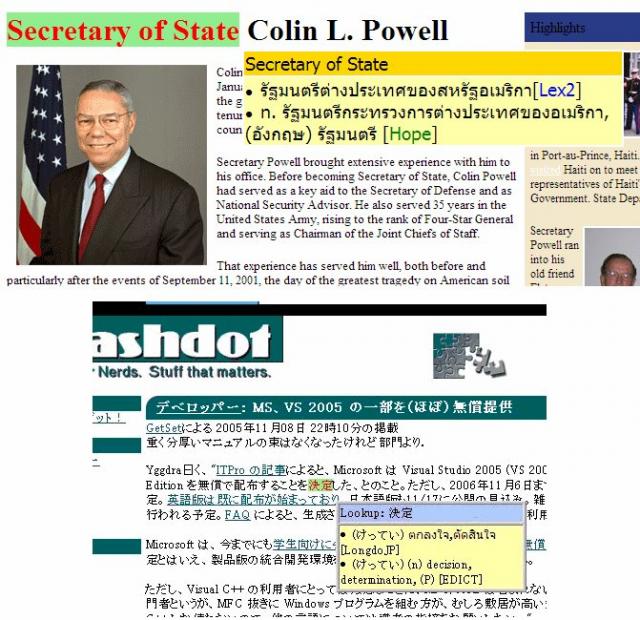
แสดงได้ทั้งความหมายของคำเดี่ยว และคำผสม ได้อย่างถูกต้อง
เช่น Secretary of State=รัฐมนตรีต่างประเทศของสหรัฐฯ (ในภาพตัวอย่าง),
High school=โรงเรียนมัธยมปลาย