(やる) (v5r,vt) (1) (uk) (col) to do; (2) (often 犯る) to have sexual intercourse; (3) (often 殺る) to kill; (4) to give (to inferiors, animals, etc.); (aux-v) (5) to do for (inferiors); (6) (See 使いにやる) to send (e.g. somebody somewhere); to dispatch (e.g. letter) (despatch); (7) to move (something to); to row (a boat); (8) (used in place of other verb) to have (eat, drink, smoke); to study; to run or operate (a restaurant); (P) [EDICT]
手
(て) (n) (1) (occ. pronounced た when a prefix) (See お手・おて・1) hand; arm; (2) (col) (See お手・おて・3) forepaw; foreleg; (3) handle; (4) hand; worker; help; (5) trouble; care; effort; (6) means; way; trick; move; technique; workmanship; (7) hand; handwriting; (8) kind; type; sort; (9) (See 手に入る) one's hands; one's possession; (10) (See 手に余る) ability to cope; (11) hand (of cards); (12) (See 山の手・1) direction; (P) [EDICT]
(shǒu, ㄕㄡˇ) hand; (formal) to hold; person engaged in certain types of work; person skilled in certain types of work; personal(ly); convenient [CE-DICT]
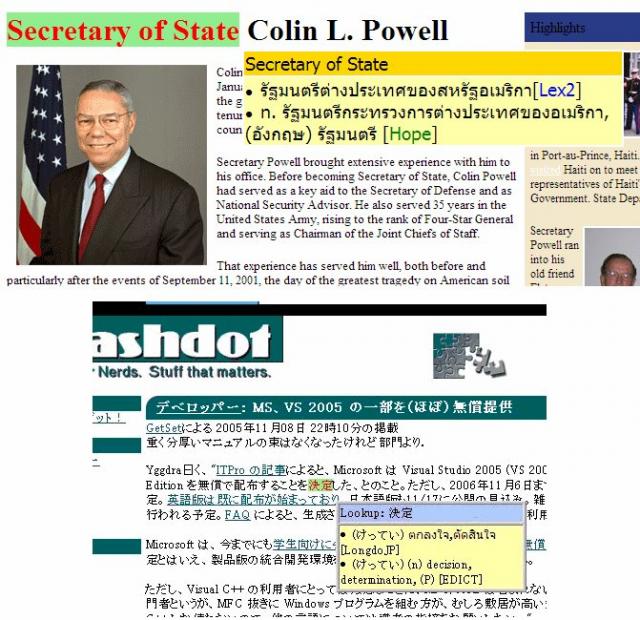
แสดงได้ทั้งความหมายของคำเดี่ยว และคำผสม ได้อย่างถูกต้อง
เช่น Secretary of State=รัฐมนตรีต่างประเทศของสหรัฐฯ (ในภาพตัวอย่าง),
High school=โรงเรียนมัธยมปลาย