a. [ Neo- + classic. ] Belonging to, or designating, the modern revival or adaptation of classical, esp. Greco-Roman, style, taste and manner of work in architecture, arts, literature, etc. [ Webster 1913 Suppl.+ WordNet 1.5 ]
[fù gǔ, ㄈㄨˋ ㄍㄨˇ, 复古 / 復古] to return to old ways (a Confucian aspiration); to turn back the clock; neoclassical school during Tang and Song associated with classical writing 古文; retro (fashion style based on nostalgia, esp. for 1960s), See also:古文#7,278[Add to Longdo]
[Hán Yù, ㄏㄢˊ ㄩˋ, 韩愈 / 韓愈] Han Yu (768-824), Tang dynasty essayist and poet, advocate of the classical writing 古文運動|古文运动 and neoclassical 復古|复古 movements, See also:古文運動, 古文运动, 復古, 复古#35,834[Add to Longdo]
[Liǔ Zōng yuán, ㄌㄧㄡˇ ㄗㄨㄥ ㄩㄢˊ, 柳宗元] Liu Zongyuan (773-819), Tang essayist and poet, advocate of the classical writing 古文運動|古文运动 and neoclassical 復古|复古 movements, See also:古文運動, 古文运动, 復古, 复古#56,522[Add to Longdo]
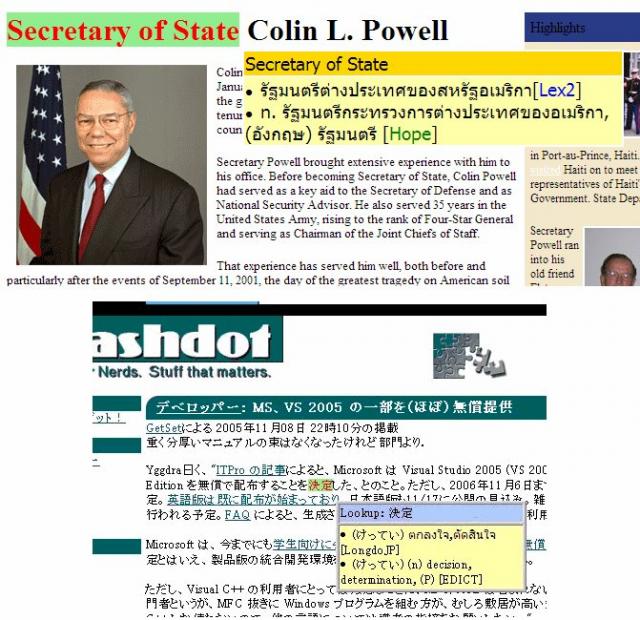
แสดงได้ทั้งความหมายของคำเดี่ยว และคำผสม ได้อย่างถูกต้อง
เช่น Secretary of State=รัฐมนตรีต่างประเทศของสหรัฐฯ (ในภาพตัวอย่าง),
High school=โรงเรียนมัธยมปลาย