(n) yellowwood tree with brittle wood and aromatic leaves and bark; source of sassafras oil; widely distributed in eastern North America, Syn.sassafras tree, Sassafras albidum
n. (Chem.) (a) An orange-red dyestuff extracted from the saffron. [ R. ] (b) A red dyestuff extracted from the safflower, and formerly used in dyeing wool, silk, and cotton pink and scarlet; -- called also Spanish red, China lake, and carthamin. (c) An orange-red dyestuff prepared from certain nitro compounds of creosol, and used as a substitute for the safflower dye. [ 1913 Webster ]
n. [ So called because used as a substitute for safranin. ] (Chem.) An orange-red nitrogenous dyestuff produced artificially by oxidizing certain aniline derivatives, and used in dyeing silk and wool; also, any one of the series of which safranine proper is the type. [ 1913 Webster ]
n. [ F. sassafras (cf. It. sassafrasso, sassafras, Sp. sasafras, salsafras, salsifrax, salsifragia, saxifragia), fr. L. saxifraga saxifrage. See Saxifrage. ] (Bot.) An American tree of the Laurel family (Sassafras officinale); also, the bark of the roots, which has an aromatic smell and taste. [ 1913 Webster ]
Australian sassafras, a lofty tree (Doryophora Sassafras) with aromatic bark and leaves. -- Chilian sassafras, an aromatic tree (Laurelia sempervirens). -- New Zealand sassafras, a similar tree (Laurelia Novae Zelandiae). -- Sassafras nut. See Pichurim bean. -- Swamp sassafras, the sweet bay (Magnolia glauca). See Magnolia. [ 1913 Webster ]
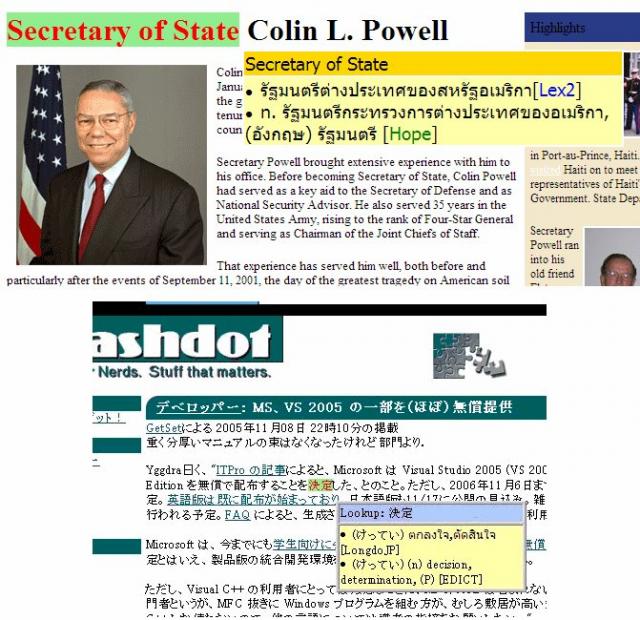
แสดงได้ทั้งความหมายของคำเดี่ยว และคำผสม ได้อย่างถูกต้อง
เช่น Secretary of State=รัฐมนตรีต่างประเทศของสหรัฐฯ (ในภาพตัวอย่าง),
High school=โรงเรียนมัธยมปลาย