v. t. [ imp. & p. p. Conjoined p. pr. & vb. n. Conjoining. ] [ F. conjoindre, fr. L. conjungere, -junctum; con- + jungere to join. See Join, and cf. Conjugate, Conjunction. ] To join together; to unite. [ 1913 Webster ]
The English army, that divided was Into two parties, is now conjoined in one. Shak. [ 1913 Webster ]
If either of you know any inward impediment why you should not be conjoined. Shak. [ 1913 Webster ]
Let that which he learns next be nearly conjoined with what he knows already. Locke. [ 1913 Webster ]
a. [ F. conjoint, p. p. of conjoindre. See Conjoin, and cf. Conjunct. ] United; connected; associated. “Influence conjoint.” Glover. [ 1913 Webster ]
Conjoint degrees (Mus.), two notes which follow each other immediately in the order of the scale, as ut and re. Johnson. -- Conjoint tetrachords (Mus.), two tetrachords or fourths, where the same note is the highest of one and the lowest of the other; -- also written conjunct. [ 1913 Webster ]
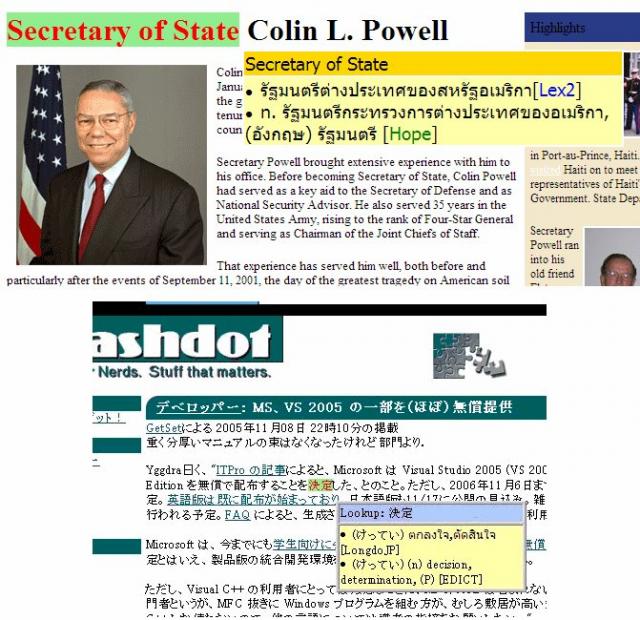
แสดงได้ทั้งความหมายของคำเดี่ยว และคำผสม ได้อย่างถูกต้อง
เช่น Secretary of State=รัฐมนตรีต่างประเทศของสหรัฐฯ (ในภาพตัวอย่าง),
High school=โรงเรียนมัธยมปลาย