n. [ OE. mosel, OF. musel, F. museau muzzle or snout, LL. musellus, fr. musus, morsus. See Muse, v. i., and cf. Morsel. ] 1. The projecting mouth and nose of a quadruped, as of a horse; a snout. [ 1913 Webster ]
2. The mouth of a thing; the end for entrance or discharge; as, the muzzle of a gun. [ 1913 Webster ]
3. A fastening or covering (as a band or cage) for the mouth of an animal, to prevent eating or vicious biting. [ 1913 Webster ]
With golden muzzles all their mouths were bound Dryden. [ 1913 Webster ]
v. t. [ imp. & p. p. Muzzled p. pr. & vb. n. Muzzling ] [ F. museler. ] 1. To bind the mouth of; to fasten the mouth of, so as to prevent biting or eating; hence, figuratively, to bind; to sheathe; to restrain from speech or action; as, the dictator muzzled all the newspapers. “My dagger muzzled.” Shak. [ 1913 Webster ]
Thou shalt not muzzle the ox when he treadeth out the corn. Deut. xxv. 4. [ 1913 Webster ]
2. To fondle with the closed mouth. [ Obs. ] L'Estrange. [ 1913 Webster ]
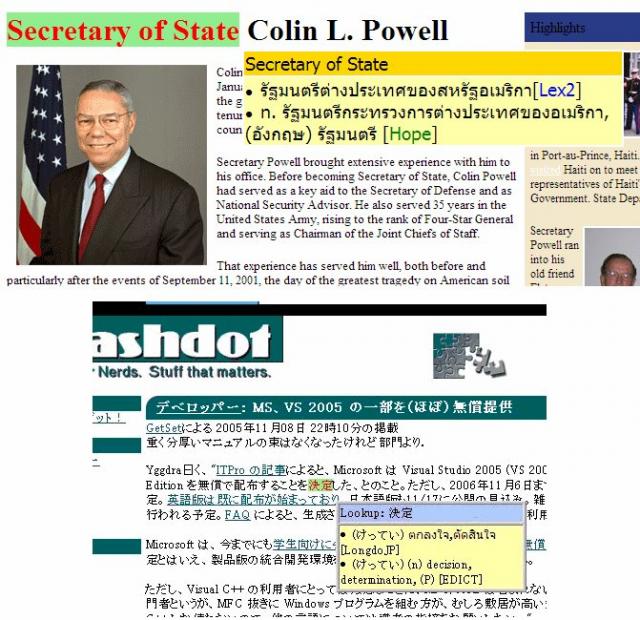
แสดงได้ทั้งความหมายของคำเดี่ยว และคำผสม ได้อย่างถูกต้อง
เช่น Secretary of State=รัฐมนตรีต่างประเทศของสหรัฐฯ (ในภาพตัวอย่าง),
High school=โรงเรียนมัธยมปลาย