a. [ F. valide, L. validus strong, from valere to be strong. See Valiant. ] [ 1913 Webster ]
1. Strong; powerful; efficient. [ Obs. ] “Perhaps more valid arms . . . may serve to better us.” Milton. [ 1913 Webster ]
2. Having sufficient strength or force; founded in truth; capable of being justified, defended, or supported; not weak or defective; sound; good; efficacious; as, a valid argument; a valid objection. [ 1913 Webster ]
An answer that is open to no valid exception. I. Taylor. [ 1913 Webster ]
3. (Law) Having legal strength or force; executed with the proper formalities; incapable of being rightfully overthrown or set aside; as, a valid deed; a valid covenant; a valid instrument of any kind; a valid claim or title; a valid marriage. [ 1913 Webster ]
n. [ Cf. F. validité, L. validitas strength. ] [ 1913 Webster ]
1. The quality or state of being valid; strength; force; especially, power to convince; justness; soundness; as, the validity of an argument or proof; the validity of an objection. [ 1913 Webster ]
2. (Law) Legal strength, force, or authority; that quality of a thing which renders it supportable in law, or equity; as, the validity of a will; the validity of a contract, claim, or title. [ 1913 Webster ]
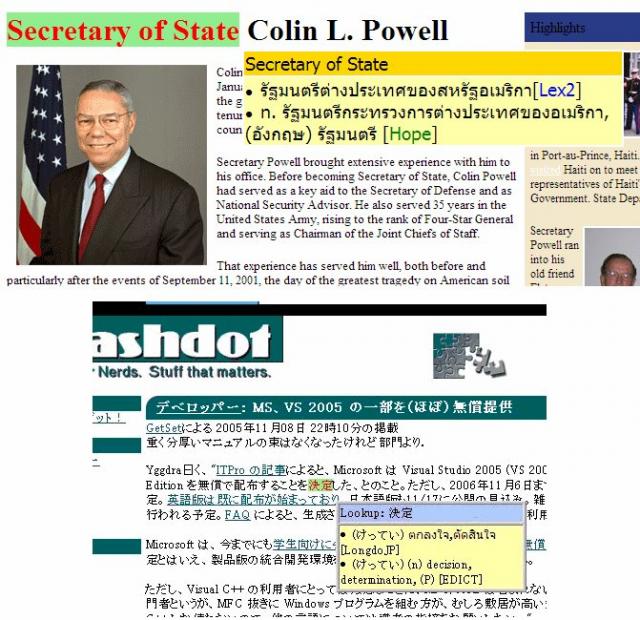
แสดงได้ทั้งความหมายของคำเดี่ยว และคำผสม ได้อย่างถูกต้อง
เช่น Secretary of State=รัฐมนตรีต่างประเทศของสหรัฐฯ (ในภาพตัวอย่าง),
High school=โรงเรียนมัธยมปลาย