(n) a contract whose performance by one party depends on the occurrence of an uncertain contingent event (but if it is contingent on the outcome of a wager it is not enforceable)
n. [ AS. ealu, akin to Icel., Sw., and Dan. öl, Lith. alus a kind of beer, OSlav. olŭ beer. Cf. Ir. ol drink, drinking. ] 1. An intoxicating liquor made from an infusion of malt by fermentation and the addition of a bitter, usually hops. [ 1913 Webster ]
☞ The word ale, in England and the United States, usually designates a heavier kind of fermented liquor, and the word beer a lighter kind. The word beer is also in common use as the generic name for all malt liquors. [ 1913 Webster ]
2. A festival in English country places, so called from the liquor drunk. “At wakes and ales.” B. Jonson.“On ember eves and holy ales.” Shak. [ 1913 Webster ]
n. [ OE. alebery, alebrey; ale + bre broth, fr. AS. brīw pottage. ] A beverage, formerly made by boiling ale with spice, sugar, and sops of bread. [ 1913 Webster ]
a. [ Gr. 'a priv. + &unr_; yelk. ] (Biol.) Applied to those ova which segment uniformly, and which have little or no food yelk embedded in their protoplasm. Balfour. [ 1913 Webster ]
n. [ /Ale + con, OE. cunnen to test, AS. cunnian to test. See Con. ] Orig., an officer appointed to look to the goodness of ale and beer; also, one of the officers chosen by the liverymen of London to inspect the measures used in public houses. But the office is a sinecure. [ Also called aletaster. ] [ Eng. ] [ 1913 Webster ]
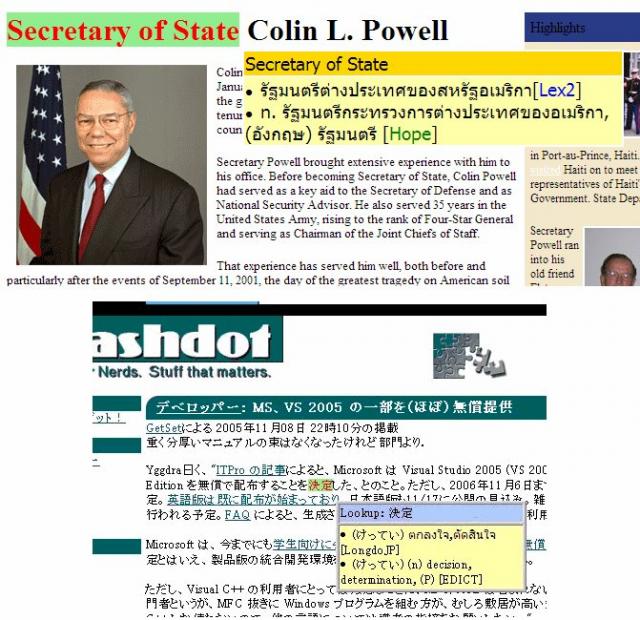
แสดงได้ทั้งความหมายของคำเดี่ยว และคำผสม ได้อย่างถูกต้อง
เช่น Secretary of State=รัฐมนตรีต่างประเทศของสหรัฐฯ (ในภาพตัวอย่าง),
High school=โรงเรียนมัธยมปลาย