a. [ L. fatalis, fr. fatum: cf. F. fatal. See Fate. ] 1. Proceeding from, or appointed by, fate or destiny; necessary; inevitable. [ R. ] [ 1913 Webster ]
These thing are fatal and necessary. Tillotson. [ 1913 Webster ]
It was fatal to the king to fight for his money. Bacon. [ 1913 Webster ]
2. Foreboding death or great disaster. [ R. ] [ 1913 Webster ]
That fatal screech owl to our house That nothing sung but death to us and ours. Shak. [ 1913 Webster ]
3. Causing death or destruction; deadly; mortal; destructive; calamitous; as, a fatal wound; a fatal disease; a fatal day; a fatal error. [ 1913 Webster ]
n.;pl.Fatalities [ L. fatalitas: cf. F. fatalité ] 1. The state of being fatal, or proceeding from destiny; invincible necessity, superior to, and independent of, free and rational control. [ 1913 Webster ]
The Stoics held a fatality, and a fixed, unalterable course of events. South. [ 1913 Webster ]
2. The state of being fatal; tendency to destruction or danger, as if by decree of fate; mortaility. [ 1913 Webster ]
The year sixty-three is conceived to carry with it the most considerable fatality. Ser T. Browne. [ 1913 Webster ]
By a strange fatality men suffer their dissenting. Eikon Basilike. [ 1913 Webster ]
3. That which is decreed by fate or which is fatal; a fatal event. Dryden. [ 1913 Webster ]
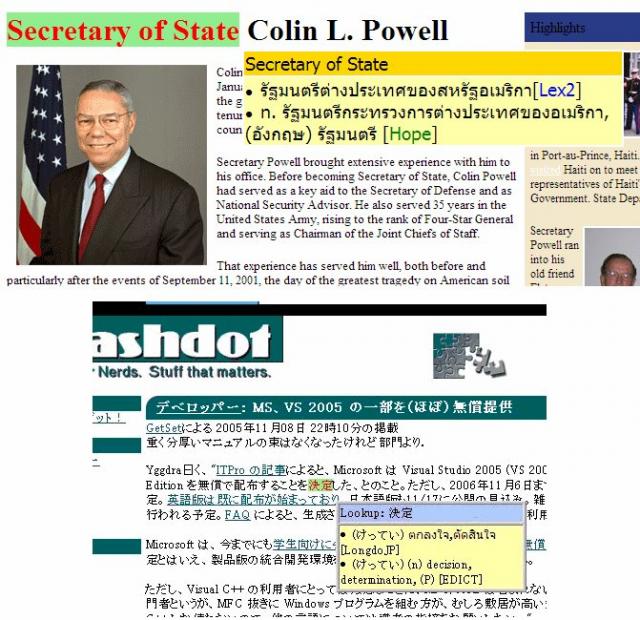
แสดงได้ทั้งความหมายของคำเดี่ยว และคำผสม ได้อย่างถูกต้อง
เช่น Secretary of State=รัฐมนตรีต่างประเทศของสหรัฐฯ (ในภาพตัวอย่าง),
High school=โรงเรียนมัธยมปลาย