v. t. [ imp. & p. p. Feigned p. pr. & vb. n. Feigning. ] [ OE. feinen, F. feindre (p. pr. feignant), fr. L. fingere; akin to L. figura figure, and E. dough. See Dough, and cf. Figure, Faint, Effigy, Fiction. ] 1. To give a mental existence to, as to something not real or actual; to imagine; to invent; hence, to pretend; to form and relate as if true. [ 1913 Webster ]
There are no such things done as thou sayest, but thou feignest them out of thine own heart. Neh. vi. 8. [ 1913 Webster ]
The poet Did feign that Orpheus drew trees, stones, and floods. Shak. [ 1913 Webster ]
2. To represent by a false appearance of; to pretend; to counterfeit; as, to feign a sickness. Shak. [ 1913 Webster ]
3. To dissemble; to conceal. [ Obs. ] Spenser. [ 1913 Webster ]
a. Not real or genuine; pretended; counterfeit; insincere; false. “A feigned friend.” Shak. [ 1913 Webster ]
Give ear unto my prayer, that goeth not out of feigned lips. Ps. xvii. 1.
-- Feign"ed*ly adv. -- Feign"ed*ness, n. [ 1913 Webster ]
Her treacherous sister Judah hath not turned unto me with her whole heart, but feignedly. Jer. iii. 10. [ 1913 Webster ]
Feigned issue (Law), an issue produced in a pretended action between two parties for the purpose of trying before a jury a question of fact which it becomes necessary to settle in the progress of a cause. Burill. Bouvier. [ 1913 Webster ]
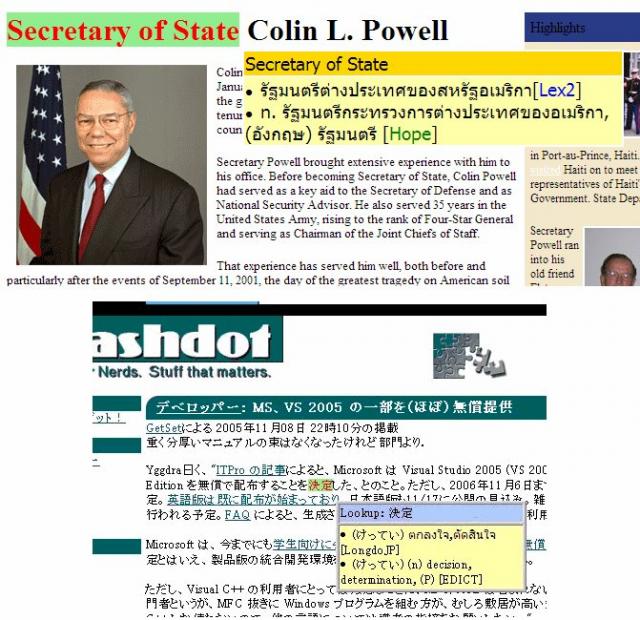
แสดงได้ทั้งความหมายของคำเดี่ยว และคำผสม ได้อย่างถูกต้อง
เช่น Secretary of State=รัฐมนตรีต่างประเทศของสหรัฐฯ (ในภาพตัวอย่าง),
High school=โรงเรียนมัธยมปลาย