n. [ See Fore, and Bear to produce. ] An ancestor; a forefather; -- usually in the plural. [ Scot. ] [ Also spelled forebear. ] “Your forbears of old.” Sir W. Scott. [ 1913 Webster ]
v. i. [ imp. ForboreForbare [ Obs. ]); p. p. Forborne p. pr. & vb. n. Forbearing. ] [ OE. forberen, AS. forberan; pref. for- + beran to bear. See Bear to support. ] 1. To refrain from proceeding; to pause; to delay. [ 1913 Webster ]
Shall I go against Ramoth-gilead to battle, or shall I forbear? 1 Kings xxii. 6. [ 1913 Webster ]
2. To refuse; to decline; to give no heed. [ 1913 Webster ]
Thou shalt speak my words unto them, whether they will hear, or whether they will forbear. Ezek. ii. 7. [ 1913 Webster ]
3. To control one's self when provoked. [ 1913 Webster ]
The kindest and the happiest pair Will find occasion to forbear. Cowper. [ 1913 Webster ]
Both bear and forbear. Old Proverb. [ 1913 Webster ]
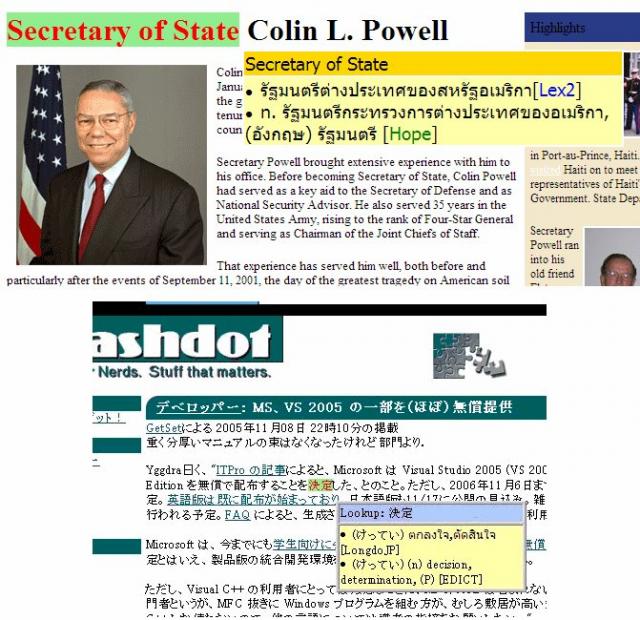
แสดงได้ทั้งความหมายของคำเดี่ยว และคำผสม ได้อย่างถูกต้อง
เช่น Secretary of State=รัฐมนตรีต่างประเทศของสหรัฐฯ (ในภาพตัวอย่าง),
High school=โรงเรียนมัธยมปลาย