(n) the questioning of a person (or a conversation in which information is elicited); often conducted by journalists, Example: my interviews with teenagers revealed a weakening of religious bonds
n. [ F. entrevue, fr. entrevoir to see imperfectly, to have a glimpse of, s'entrevoir to visit each other. See Inter-, and View. ] [ 1913 Webster ]
1. A mutual sight or view; a meeting face to face; usually, a formal or official meeting for consultation; a conference; as, the secretary had an interview with the President. [ 1913 Webster ]
2. A conversation, or questioning, for the purpose of eliciting information for publication; the published statement so elicited. [ 1913 Webster ]
☞ A recent use, originating in American newspapers, but apparently becoming general. [ 1913 Webster ]
v. t. To have an interview with; to question or converse with, especially for the purpose of obtaining information for publication. [ Recent ] [ 1913 Webster ]
n. One who interviews; especially, one who obtains an interview with another for the purpose of eliciting his opinions or obtaining information for publication. [ 1913 Webster ]
It would have made him the prince of interviewers in these days. Leslie Stephen. [ 1913 Webster ]
n. The act or custom of holding an interview or interviews. [ 1913 Webster ]
An article on interviewing in the “Nation” of January 28, 1869, . . . was the first formal notice of the practice under that name. The American. [ 1913 Webster ]
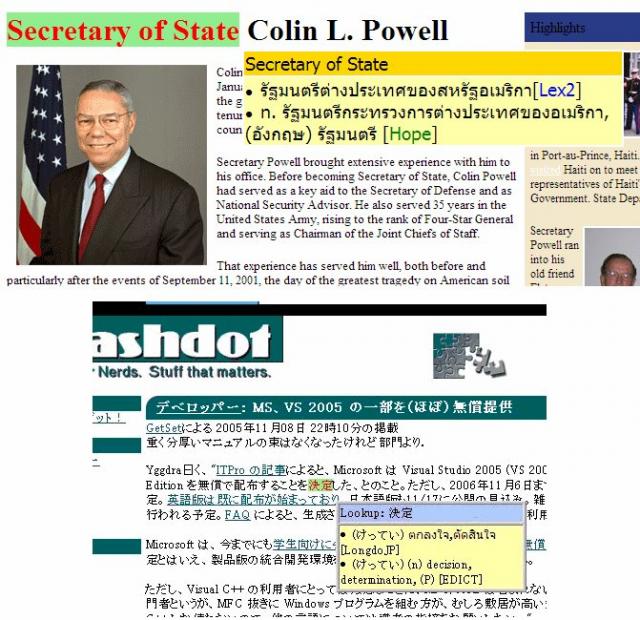
แสดงได้ทั้งความหมายของคำเดี่ยว และคำผสม ได้อย่างถูกต้อง
เช่น Secretary of State=รัฐมนตรีต่างประเทศของสหรัฐฯ (ในภาพตัวอย่าง),
High school=โรงเรียนมัธยมปลาย