n.; pl.Lotteries [ Lot + -ery, as in brewery, bindery. ] 1. A scheme for the distribution of prizes by lot or chance; esp., a gaming scheme in which one or more tickets bearing particular numbers draw prizes, and the rest of the tickets are blanks. Fig.: An affair of chance. [ 1913 Webster ]
☞ The laws of the United States and of most of the States make private lotteries illegal, except in certain circumstances for charitable institutions; however, many of the states now conduct lotteries tehmselves as a revenue source. [ 1913 Webster +PJC ]
n. [ F. loto or It. lotto, prop., a lot; of German origin. See Lot. ] A game of chance, played with cards or tickets, on which are inscribed numbers, and any contrivance (as a wheel containing numbered balls) for determining a set of numbers by chance. The player holding a card having on it the set of numbers drawn from the wheel takes the stakes after a certain percentage of them has been deducted for the dealer. In some systems, lesser prizes are awarded for having some but not all of the numbers selected, such as four or five numbers in a six-number drawing. A variety of lotto is called keno. In another variety, the player chooses the numbers for the card or ticket s/he holds. There may be from three to seven different numbers on a card or ticket. In a modern computerized lotto system conducted by state authorities, the player chooses numbers, or allows the computer to choose numbers at random, which are then printed on a ticket that the player holds until the winning number is selected. [ Often written loto. ] [ 1913 Webster +PJC ]
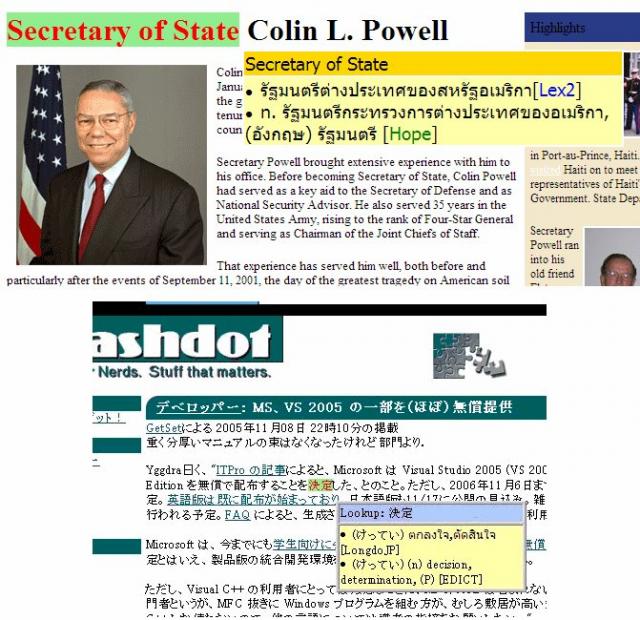
แสดงได้ทั้งความหมายของคำเดี่ยว และคำผสม ได้อย่างถูกต้อง
เช่น Secretary of State=รัฐมนตรีต่างประเทศของสหรัฐฯ (ในภาพตัวอย่าง),
High school=โรงเรียนมัธยมปลาย