n. [ From Menaccan, in Cornwall, where it was first found. ] (Min.) An iron-black or steel-gray mineral, consisting chiefly of the oxides of iron and titanium. It is commonly massive, but occurs also in rhombohedral crystals. Called also titanic iron ore, and ilmenite. [ 1913 Webster ]
n. [ F., fr. L. minaciae threats, menaces, fr. minax, -acis, projecting, threatening, minae projecting points or pinnacles, threats. Cf. Amenable, Demean, Imminent, Minatory. ] The show of an intention to inflict evil; a threat or threatening; indication of a probable evil or catastrophe to come. [ 1913 Webster ]
His (the pope's) commands, his rebukes, his menaces. Milman. [ 1913 Webster ]
The dark menace of the distant war. Dryden. [ 1913 Webster ]
v. t. [ imp. & p. p. Menaced p. pr. & vb. n. Menacing ] [ OF. menacier, F. menacer. See Menace, n. ] 1. To express or show an intention to inflict, or to hold out a prospect of inflicting, evil or injury upon; to threaten; -- usually followed by with before the harm threatened; as, to menace a country with war. [ 1913 Webster ]
My master . . . did menace me with death. Shak. [ 1913 Webster ]
2. To threaten, as an evil to be inflicted. [ 1913 Webster ]
By oath he menaced Revenge upon the cardinal. Shak. [ 1913 Webster ]
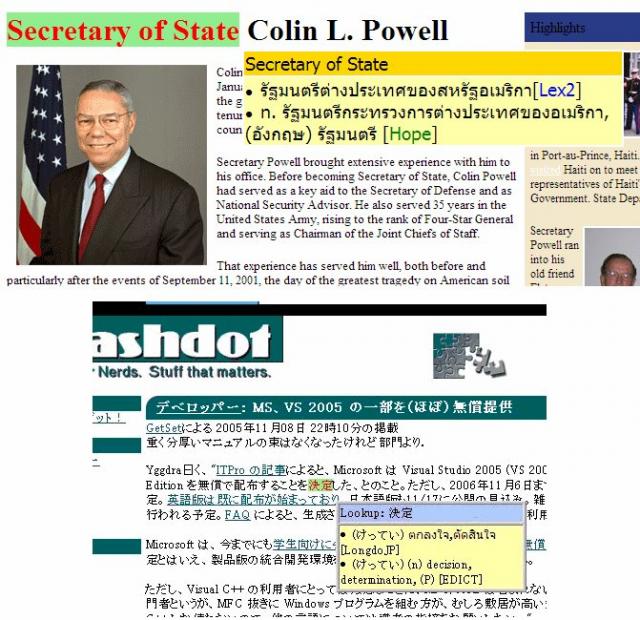
แสดงได้ทั้งความหมายของคำเดี่ยว และคำผสม ได้อย่างถูกต้อง
เช่น Secretary of State=รัฐมนตรีต่างประเทศของสหรัฐฯ (ในภาพตัวอย่าง),
High school=โรงเรียนมัธยมปลาย