(n) a state of inactivity (in business or art etc), Syn.doldrums, stagnancy, Example: economic growth of less than 1% per year is considered to be economic stagnation
v. i. [ imp. & p. p. Stagnated p. pr. & vb. n. Stagnating. ] [ L. stagnatus, p. p. of stagnare to stagnate, make stagnant, from stagnum a piece of standing water. See Stank a pool, and cf. Stanch, v. t. ] 1. To cease to flow; to be motionless; as, blood stagnates in the veins of an animal; hence, to become impure or foul by want of motion; as, air stagnates in a close room. [ 1913 Webster ]
2. To cease to be brisk or active; to become dull or inactive; as, commerce stagnates; business stagnates. [ 1913 Webster ]
Ready-witted tenderness . . . never stagnates in vain lamentations while there is any room for hope. Sir W. Scott. [ 1913 Webster ]
n. [ Cf. F. stagnation. ] 1. The condition of being stagnant; cessation of flowing or circulation, as of a fluid; the state of being motionless; as, the stagnation of the blood; the stagnation of water or air; the stagnation of vapors. [ 1913 Webster ]
2. The cessation of action, or of brisk action; the state of being dull; as, the stagnation of business. [ 1913 Webster ]
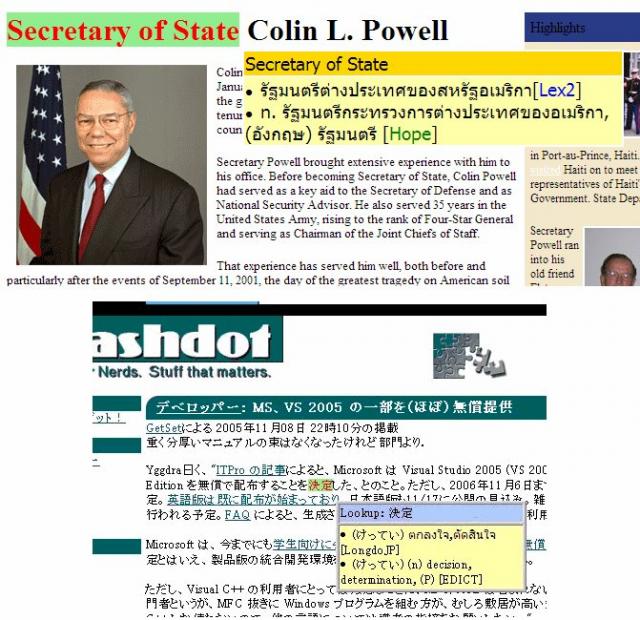
แสดงได้ทั้งความหมายของคำเดี่ยว และคำผสม ได้อย่างถูกต้อง
เช่น Secretary of State=รัฐมนตรีต่างประเทศของสหรัฐฯ (ในภาพตัวอย่าง),
High school=โรงเรียนมัธยมปลาย