n. [ OE. thefte, AS. þiéfðe, þ&ymacr_;fðe, þeófðe. See Thief. ] 1. (Law) The act of stealing; specifically, the felonious taking and removing of personal property, with an intent to deprive the rightful owner of the same; larceny. [ 1913 Webster ]
☞ To constitute theft there must be a taking without the owner's consent, and it must be unlawful or felonious; every part of the property stolen must be removed, however slightly, from its former position; and it must be, at least momentarily, in the complete possession of the thief. See Larceny, and the Note under Robbery. [ 1913 Webster ]
2. The thing stolen. [ R. ] [ 1913 Webster ]
If the theft be certainly found in his hand alive, . . . he shall restore double. Ex. xxii. 4. [ 1913 Webster ]
n. [ Theft + bote compensation. ] (Law) The receiving of a man's goods again from a thief, or a compensation for them, by way of composition, with the intent that the thief shall escape punishment. [ 1913 Webster ]
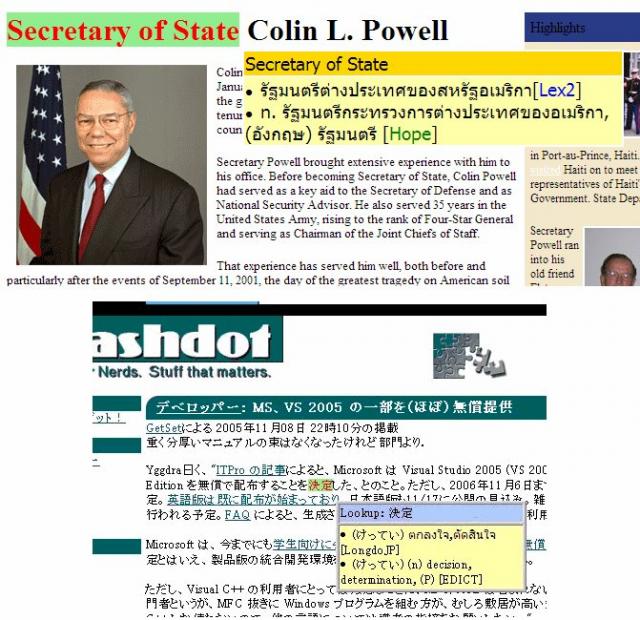
แสดงได้ทั้งความหมายของคำเดี่ยว และคำผสม ได้อย่างถูกต้อง
เช่น Secretary of State=รัฐมนตรีต่างประเทศของสหรัฐฯ (ในภาพตัวอย่าง),
High school=โรงเรียนมัธยมปลาย